


Gegründet 2012 und haben seit 2014 auch immer Dividende gezahlt.
Börsennotierung dann 2022.
Danke ! ![[smilie_blume]](https://goldseiten-forum.com/wcf/images/smilies/smilie_blume1.gif "smilie_blume")
19. Oktober 2026, 10:59
Gegründet 2012 und haben seit 2014 auch immer Dividende gezahlt.
Börsennotierung dann 2022.
Danke !
Ich kann euch hier immer wieder nur die kanadische Source Rock Royalties ans Herz legen.
Keine Schulden, Management hält 10% der Aktien, 20% ein kanadischer Eisenbahn Pensions Fund.
Monatliche stabile Dividenzahlungen (ca. 9 % jährlich).
Und der Kurs hat noch jede Menge Potential.
Die ist erst seit 2021 auf dem Markt ?! Also noch recht neu .

Oil’s Problem Isn’t Iran or Russia — It’s Too Much Oil
By Irina Slav - Jan 17, 2026, 6:00 PM CSTOil prices are retreating after a geopolitics-driven spike, as the glut narrative regains control.Rising inventories, sanctioned crude weighing on tanker data, and new Venezuelan barrels reinforce oversupply fears.Geopolitical risks still lurk, from Iranian unrest to drone attacks near key export routes, but so far they have failed to override expectations of ample supply and weaker price support.
Mehr im Link dazu ...
Dankeschön
WKN ist diese hier ?A0LHC1

Hatte mir gestern eine Position Aker BP geholt - demnächst dürfte wieder die Dividende fällig sein - ca. 10% aufs Jahr vor Steuern.
hi vatapitta , hast du das Datum Ex Dividende ?
 Externer Inhalt x.comInhalte von externen Seiten werden ohne Ihre Zustimmung nicht automatisch geladen und angezeigt.Durch die Aktivierung der externen Inhalte erklären Sie sich damit einverstanden, dass personenbezogene Daten an Drittplattformen übermittelt werden. Mehr Informationen dazu haben wir in unserer Datenschutzerklärung zur Verfügung gestellt.
Aus welchem Jahr war das? Kann man nicht erkennen:
Der Jahresrückblick von Nuhr war erste Sahne...
Logo musste er ,aber immer nur kurz ,gewisse Ergüsse hinzufügen, aber es war ein Genuss...wie er abgerechnet hat.... ![[smilie_happy]](https://goldseiten-forum.com/wcf/images/smilies/smilie_happy_058.gif "smilie_happy")
Wann hast du den eingepflanzt ?
Meinen Knoblauch habe ich erst Mitte November gesetzt . Da ist noch nix zu sehen.
13. November 2025von Dr. Peter F. Mayer5,1 Minuten Lesezeit
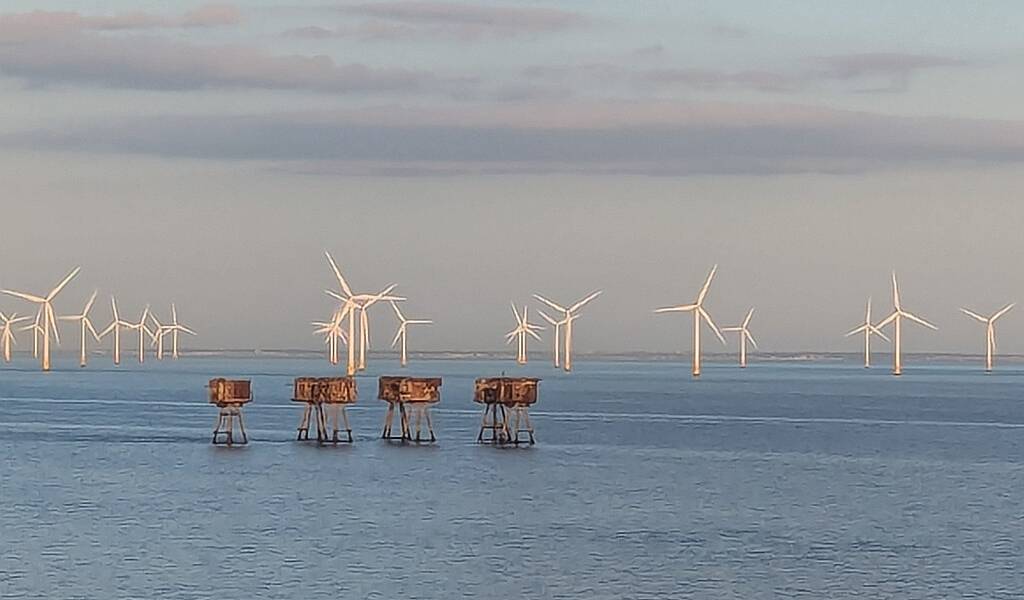
Windkraft sollte des Klima schützen, CO2 verhindern und die Erderwärmung hintanhalten. Sie tun nichts dergleichen, sondern verursachen Erwärmung von Land- und Meeresoberflächen sowie der Atmosphäre. „Windkraftanlagen erzeugen Strom, indem sie die kinetische Energie des Windes in elektrische Energie umwandeln. Folglich verringert die Energieentnahme durch die Turbinen die Windgeschwindigkeit und verstärkt Turbulenzen“, schreiben die Forscher in der Einleitung.
Damit wird auch klar, dass es keine „erneuerbare“ Energie gibt und nicht geben kann, zumindest nicht dort wo die Naturgesetze gelten. Also nicht in der Politik, es ist politische Propaganda.
Die Studie von Hyodae Seo et al mit dem Titel „Sea surface warming and ocean-to-atmosphere feedback driven by large-scale offshore wind farms under seasonally stratified conditions“ (Erwärmung der Meeresoberfläche und Rückkopplung zwischen Ozean und Atmosphäre, verursacht durch großflächige Offshore-Windparks unter saisonal geschichteten Bedingungen) erschien am 5. November in Atmospheric Science.
Die Autoren weisen auf einer Reihe von Studien über die Erwärmung von Land- und Meeresoberflächen sowie der Atmosphäre durch Windparks hin. „Sowohl bei kleinen als auch bei großen Offshore-Windparks sind diese Nachlaufeffekte gut dokumentiert, nicht nur als reduzierte Stromerzeugung innerhalb der Windparks, sondern auch als veränderte oberflächennahe Meteorologie und Luft-Meer-Flüsse. Diese Veränderungen können ozeanische und ökologische Reaktionen hervorrufen.“
Eine Studie von Rui Li von der Cornell Universität hat sogar Windschleppen und Nachlaufeffekte mit einer Länge von 100 km nachgewiesen. Es handelt sich also nicht nur um eng begrenzte lokale Effekte.
Diese Studien wurden rund um den Globus gemacht, wie etwa in der Nordsee und Deutschen Bucht, entlang der kalifornischen Küste, am mittelatlantischen Schelf und natürlich auch an Land wie jüngst von 250 verschieden großen Windparks in China.
Die Verwirblungen durch Windräder in „Offshore-Windparks können durch Rückkopplungen zwischen Ozean und Atmosphäre Veränderungen in der oberen Meeresoberfläche und der oberflächennahen Atmosphäre hervorrufen.“
Die Forscher fanden heraus, dass die „Verringerungen der Windstärke aufgrund großflächiger Windparkcluster zu einer Erwärmung der Meeresoberfläche um 0,3 bis 0,4 °C und einer flacheren Mischschicht führen“.
Auch vertikal führen Windparks zu atmosphärischen Veränderungen: „Windparks beeinflussen auch die Höhe der planetarischen Grenzschicht (PBLH), indem sie die Turbulenzen in Bodennähe verstärken und die Windscherungsprofile verändern.“ Die Veränderungen erstrecken sich um bis zu 200 m in die Höhe.
Innerhalb einer Windfarm wird die Windstärke um 10 bis 20% reduziert im Nachlaufbereich um 5 bis 10%.
Da die Erwärmung der Meeresoberfläche nach einer Verringerung der Windstärke und Veränderungen in den Prozessen der Meeresmischschicht auftreten, können sie auch die Temperatur in den unteren Schichten der Atmosphäre kontinuierlich beeinflussen, indem sie Wärme vom Ozean an die Atmosphäre übertragen. „Der auf die Ozeankopplung zurückzuführende turbulente Wärmefluss nach oben reicht von 5 bis 10 W m−2 …“.
Weiter wurde eine Erhöhung der Lufttemperatur in Bodennähe beobachtet, die mit etwa 0,2 °C angegeben wird, was etwa der in China an Land beobachteten Erwärmung entspricht.Die Grafik erläutert die Veränderungen und Energieflüsse im Bereich des Windrades:
[Blockierte Grafik: https://i0.wp.com/tkp.at/wp-content/uploads/2025/11/sciadv.adw7603-f10.jpg?resize=995%2C1024&ssl=1]
mehr dazu im Link.


SSD verlieren nach 3 Jahren Daten. Alte HDD's sind besser
und Günstiger in der Anschaffung

Stinkstiefel. Hältst Deine Intrige sicher für psychologisch filigran. Mach doch einen thobaffin-Chartfaden auf und lade die Creme der Analysten zur Mitwirkung ein. Oder quetsch mal wieder etwas technischen Esprit aus Deinem eigenen Nähkästchen. Dann brauchst auch nicht mehr hier reinschauen. Besser wär‘ das.

Woernie … gaaaanz ruhig…in unserem Alter sollte man sich nicht mehr so aufregen
Das ist es doch nicht wert !
Mach einen blauen Balken drauf
Heute zufällig diesen Bericht auf NTV im Netz gesehen...

25.10.2025 16:44 Uhr – 03:01 min
Der Immobilienmarkt in Kapstadt boomt, viele Ausländer kaufen Häuser und Wohnungen zu verhältnismäßig günstigen Preisen. Darunter auch auffällig viele Deutsche - vor allem seit Jahresbeginn. Ein zweites Standbein, für den Fall, dass das Leben in Deutschland komplizierter wird.
Selten so gelacht... Fake News vom Feinsten...
Superbillig ....das war einmal....seit 2011 sind wir nicht mehr dort gewesen...obwohl wir bei Freunden wohnen könnten...Es ist ausgesprochen teuer geworden in Capetown und SA
das letzte mal 2010 hab ich nur noch Bilder gemacht, wie dort versucht wird, mit messerscharfen Objekten auf den Mauern ums Haus , zu verhindern, dass eingebrochen wird...
Abends zu Essen ausgehen...Fehlanzeige...zu gefährlich...die N2 zu befahren nachts ist mehr als nur gefährlich ...und die Polizei kommt nicht...
Jetzt versuchen sie , die N2 sicherer zu machen...wers glaubt...
Leider kommt man nur über diese N2 zum Flughafen und zurück ...und das wissen die natürlich

The City of Cape Town has stepped up its fight against crime on one of its busiest highways. Forty new Metro Police Officers have been deployed to patrol the N2, as well as the nearby Airport and Borcherd’s Quarry precincts.
This rollout marks the single biggest safety investment in over a decade and forms part of a citywide plan to deploy 700 new police officers, including dedicated neighbourhood policing in every ward, a historic first for Cape Town.

By Irina Slav - Oct 06, 2025, 7:00 PM CDT
OPEC+ yesterday agreed to yet another monthly boost in production, this time for a modest 137,000 barrels daily. Oil prices inched up, yet they remain tightly range-bound, with Brent at just over $65 per barrel following the news. On the one hand, this is good news for consumer countries—including the U.S. On the other hand, it’s bad news for producer countries—including, again, the U.S.
The Wall Street Journal called Saudi Arabia’s strategy of leading the production cut unwinding a gift to President Trump. It would keep prices at the pump low, the publication said, and cushion the blow from tariffs. It would also hurt Russian energy export revenues, making Trump’s job in mediating an end to the war in Ukraine easier, the argument went.
In some respects, the Saudi-led return to production growth in OPEC+ has indeed been positive for the U.S. with regard to retail fuel prices. The national average per AAA stood at $3.133 per gallon on Sunday. That’s down on the year, but, in all honesty, not much: a year ago, a gallon of fuel cost an average of $3.176. This is only a snapshot of gas prices in the United States, and it does not make much sense as an informative piece of data given state-based price differences stemming from taxation. California comes to mind as the place with the highest gas prices, regardless of OPEC+ policy.
At the same time, lower oil prices have caused worry in the shale patch. This may or may not have been among the goals of the Saudis and their OPEC+ partners when they made the decision to start unwinding those cuts agreed in 2022. Most media reports on the topic point to OPEC trying to win back market share from the U.S., Guyana, and Brazil.
However, there is more to this story than barrels from Brazil, the U.S., and Guyana, simply replacing barrels from Saudi Arabia and Iraq. For starters, take U.S. oil exports to China. Those plunged by almost 50% last year—before Trump started slapping tariffs left and right. The tariffs, of course, did not help. So U.S. oil had to be redirected to Europe.
Incidentally, Guyanese crude is also going to Europe, so Guyana and the U.S. are effectively as much of a pair of rivals as the U.S. and Saudi—except Guyana’s total production currently stands at less than 700,000 barrels daily. That’s hardly a real rival to either the U.S. or Saudi Arabia. Brazil, meanwhile, is indeed boosting its own crude oil exports—and a lot of these are going to China.
Related: Kyrgyzstan Faces Harsh Winter as Key Reservoir Hits Decade-Low Levels
This is the battlefield of oil exporters—China and wider Asia. This is where demand is growing most strongly and where it will continue growing strongly after growth peaks elsewhere, at least according to the majority of forecasters. For now, however, demand is still growing, even in Europe—how else would one explain the fact that European countries continue importing Russian crude, despite sanctions and a recent push to end all energy imports from the country in a couple of months?
The Wall Street Journal’s article suggested that Saudi Arabia is trying to score points with President Trump. Saudi Arabia’s actions since the Biden administration’s fiasco in maintaining a close relationship with Riyadh, however, suggest it has other priorities, such as funding all the Vision 2030 projects, amid stubbornly low prices that, per OPEC, do not reflect demand trends accurately.
Trump, meanwhile, has an oil industry to make happy after making it angry about tariffs and those very same low oil prices that are plaguing Saudi Arabia’s economic transformation plans. The U.S. president’s energy dominance agenda will not work if drillers are not drilling because prices are too low for them to make a profit. However, this was always going to be a problem, regardless of what OPEC+ was doing with its own production. Trump’s twin goals of keeping prices at the pump low and oil drillers happy are mutually exclusive, after all.
Incidentally, Guyanese crude is also going to Europe, so Guyana and the U.S. are effectively as much of a pair of rivals as the U.S. and Saudi—except Guyana’s total production currently stands at less than 700,000 barrels daily. That’s hardly a real rival to either the U.S. or Saudi Arabia. Brazil, meanwhile, is indeed boosting its own crude oil exports—and a lot of these are going to China.
Related: Kyrgyzstan Faces Harsh Winter as Key Reservoir Hits Decade-Low Levels
This is the battlefield of oil exporters—China and wider Asia. This is where demand is growing most strongly and where it will continue growing strongly after growth peaks elsewhere, at least according to the majority of forecasters. For now, however, demand is still growing, even in Europe—how else would one explain the fact that European countries continue importing Russian crude, despite sanctions and a recent push to end all energy imports from the country in a couple of months?
The Wall Street Journal’s article suggested that Saudi Arabia is trying to score points with President Trump. Saudi Arabia’s actions since the Biden administration’s fiasco in maintaining a close relationship with Riyadh, however, suggest it has other priorities, such as funding all the Vision 2030 projects, amid stubbornly low prices that, per OPEC, do not reflect demand trends accurately.
Trump, meanwhile, has an oil industry to make happy after making it angry about tariffs and those very same low oil prices that are plaguing Saudi Arabia’s economic transformation plans. The U.S. president’s energy dominance agenda will not work if drillers are not drilling because prices are too low for them to make a profit. However, this was always going to be a problem, regardless of what OPEC+ was doing with its own production. Trump’s twin goals of keeping prices at the pump low and oil drillers happy are mutually exclusive, after all.
 Alles anzeigen
Letztes Jahr habe ich den Schornsteinfeger unmissverständlich und mit lauter und dumpfer Stimme klar gemacht, dass ich den Scheiss NICHT mit mache.
Er schaute nur hoch zu mir und sagte; Äh, ist alles in Ordnung".
Ich: Ok, also kann ich den weiter nutzen ? Er: Ja.....
Bei einem Freund von mir das gleiche.
Aber ich kenne auch viele, wo der Schornsteinfeger energisch sein Ding durchzieht.
Kommt mir irgendwie bekannt vor das Ganze....


Z
Wir haben ja dieses Jahr eine neue Ölheizung einbauen lassen, die natürlich vom Schornsteinfeger abgenommen werden musste.
Wir haben eigentlich immer den gleichen. Allerdings wechselt ganz normal die Person dazu. Diesmal wieder ein Neuer.
Die Vorgänger waren schon immer OK.
Aber der hier war Tiefenentspannt.
Er fand das auch vollkommen in Ordnung, dass wir uns wieder für eine Ölheizung entschieden hatten.
Einer der Gründe war auch für ihn, unabhängig zu sein mit der Heizung.
Und das geht nur mit Öl , Holz oder Pellets.
Wir haben uns köstlich unterhalten und es gab auch einerlei Einschränkungen etc was unseren Kachelofen angeht , der ja schon vom Vorgänger als Grundofen eingestuft wurde.
Es gibt sie also noch. Schornsteinfeger mir gesundem Menschenverstand 
 Alles anzeigen
Die Arktis will nicht schmelzen und die Klima(w)irren drehen durch [Neue Studie]
Posted on August 21, 2025 by Michael Klein
Derzeit haben wir als Sozialwissenschaftler fast täglich die Gelegenheit, das, was schon Milton Rokeach oder Stanley Milgram oder Leon Festinger fasziniert hat, zu studieren:
Die Unwilligkeit von Leuten, die mit Boebachtungen konfrontiert werden, die NICHT zu ihren Erwartungen passen, die Überzeugungen, auf deren Grundlage die offenkundig FALSCHEN Erwartungen formuliert wurden, fallen zu lassen.
In der Sozialpsychologie ist dies ein klassischer Fall der Auflösung einer kognitiven Dissonanz zugunsten vorhandener Vorurteile, also fester, unveränderlicher, nicht einmal durch empirische Fakten, die das Gegenteil belegen, veränderlicher Überzeugungen, die in diesem Fall zudem vor Falsifikation gesichert sind, weil sie Teil eines ideologischen Überzeugungssystems sind, wie man sie gewöhnlich bei den Mitgliedern religiöser Kulte findet.
Die Studie, die wir heute besprechen, bietet einen guten Einblick in die Funktionsweise solcher Kultmitglieder. Eine Studie zu „Klimawandel“, die andere als die erwarteten Ergebnisse erbringt, wird auf diese Weise zu einer Studie zur Sozialpsychologie, der an Geist und Gehirn versehrten Klimakultisten.
Hallo Salito ...vielleicht solltest du KI nochmal befragen...warum die Arktis nicht schmelzen will ....

dein wunsch ist mir befehl
digitaler euro, co2 konto ... ... ...
Dankeschön Dadurch ist es leichter wieder zu finden,
Upps!
Sollte man über einen Ausstieg nachdenken ?
Korrekt: Mittlerweile halte ich keine Kursansage mehr für utopisch.

By Michael Kern - Sep 12, 2025, 11:30 AM CDT
The EU could accelerate the phase out of natural gas imports from Russia and end purchases within six to 12 months by replacing it with American LNG, U.S. Energy Secretary Chris Wright told Reuters on Friday, after communicating the same to EU officials in Brussels on Thursday.
“I think this could easily be done within 12 months, maybe within six months,” Secretary Wright told Reuters, adding that “I definitely voiced the opinion we could do it faster.”
“On the U.S. side, we could do it faster, and I think it would be good if those dates were moved up even more. I don't know that that's going to happen, but that was dialogued,” Wright said, referring to his meeting with EU Energy Commissioner Dan Jorgensen.
The EU currently plans to phase out all imports of Russian gas by the end of 2027, under a roadmap to end dependencyon Russian energy unveiled in May this year.
The roadmap calls for the EU to stop all imports of Russian gas by the end of 2027 by improving the transparency, monitoring, and traceability of Russian gas across the EU markets. New contracts with suppliers of Russian gas will be prevented and spot contracts (for immediate payment) will be stopped by the end of 2025.
Related: Australia Approves North West Shelf LNG Extension to 2070
“We are particularly looking at phasing out Russian fossil fuels faster,” European Commission President Ursula von der Leyen said in the 2025 State of the Union Address on Wednesday, without giving details how the EU could do it.
The U.S. has increased pressure on Europe to cut off its energy dependence on Russia and stop buying Russian oil and gas to reduce revenues for the Kremlin and force Vladimir Putin to engage in genuine talks on peace in Ukraine.
“The faster we phase out, the sooner you put pressure on Russia,” Secretary Wright told Reuters, as the United States is intensifying pressure on its EU and G7 partners to act with tariffs on India and China over their continued imports of Russian crude oil.
By Michael Kern for Oilprice.com

Puerto Rico Climate Case Against Oil Majors Gets Tossed
By Julianne Geiger - Sep 12, 2025, 1:30 PM CDT
A federal judge in Puerto Rico has tossed out a climate lawsuit against a slate of oil and gas majors, ending a challenge brought by nearly 80 municipalities five years after Hurricanes Irma and Maria devastated the island.
US District Judge Silvia Carreno-Coll signed the order on Thursday, dismissing the class-action claims against ExxonMobil, Chevron, Shell, BP, ConocoPhillips, Motiva, Occidental, BHP, Rio Tinto, and the American Petroleum Institute (API). The municipalities alleged the companies colluded to conceal the climate risks of fossil fuels, arguing that manmade warming intensified the 2017 storms.
Carreno-Coll rejected the case on procedural grounds, ruling that the plaintiffs blew past the statute of limitations. Under antitrust law, they had four years from the hurricanes to file. “By September 2021, the 2017 hurricanes’ four-year mark, Plaintiffs knew or should have known they had suffered considerable injury and who to sue,” she wrote. The claims against Exxon, Chevron, Shell, BP, ConocoPhillips, and Motiva were dismissed with prejudice, blocking any refiling. Claims against Occidental, BHP, and Rio Tinto were dismissed without prejudice, leaving the door open for a narrower return.
The ruling is a setback for the broader wave of climate litigation targeting oil companies for allegedly misleading the public on fossil fuel risks. More than two dozen similar cases are moving through state and federal courts, with mixed outcomes. The Puerto Rico case, filed in November 2022, was among the more ambitious, tying specific storm damage to alleged industry deception.
Industry groups hailed the dismissal. API senior vice president Ryan Meyers said the “meritless claims” amounted to a politicized distraction and a waste of taxpayer money, adding climate policy should be left to Congress rather than “a patchwork of courts.” Shell declined to comment.
By Julianne Geiger for Oilprice.com
https://www.spiegel.de/panoram…02-4b33-b649-8b15d8a3057c
Was für ein bullshit…
Ein Kommentar: Dank des Klimawandels bin ich bei meiner Frau jetzt nicht mehr an allem schuld.
Stimmt ...


