



War noch nie dort, aber die Fontaine ist charakteristisch.
Ich war auch noch nie dort...
Aber...da hat jemand einen gravierenden Fehler beim hochladen vom ersten Photo gemacht.... ![[smilie_happy]](https://goldseiten-forum.com/wcf/images/smilies/smilie_happy_058.gif "smilie_happy")
19. Oktober 2026, 16:05
War noch nie dort, aber die Fontaine ist charakteristisch.
Ich war auch noch nie dort...
Aber...da hat jemand einen gravierenden Fehler beim hochladen vom ersten Photo gemacht....

Twelve apps. One craft.
Image editing, vector illustration, video, photography, PDFs, motion graphics, page layout, word processing, audio, presentations, CAD and spreadsheets. Native, open-source apps from the ArtCraft team, built in Rust and free to use.
Ich arbeite mit MacOSX und habe zur Bildbearbeitung etc die Produkte von Affinity Photo
Einmal was gezahlt und dann war Ruhe...
Kennt ihr die und wenn ja , würde mich eure Meinung dazu interessieren

Haben eine neue Ölfundstelle entdeckt.
Die brasilianische Petrobras entdeckt eine neue Ölfundstelle vor der Küste des Bundesstaates Amapá
Dankeschön ![[smilie_blume]](https://goldseiten-forum.com/wcf/images/smilies/smilie_blume1.gif "smilie_blume")
@ all...
weiss jemand, was bei Petrolio Brasilio los ist???
in USA vorbörslich knapp 10% im Plus
und in meinem Depot gab es ein sattes Plus bei der Aktie 
nicht, dass ich irgendetwas dagegen hätte ...
E Auto ist bei uns auch immer mal ein Thema.
Solange unsere 2 Diesel weiterhin so schnurren, allerdings auch wieder kein! Thema...
Würde keinen unserer Diesel für einen Stromer eintauschen.
Mein Mann denkt da wieder anders drüber...aber DAS hatten wir ja schon bei der Impfplörre...
Nun zu meiner Beobachtung...was E Autos angeht.
Vor ein paar Wochen auf der Autobahn abends vom Abschluss Konzert von Emmylou Harris auf der Heimfahrt.
Uns überholte mit Mordstempo ein Stromer...so nach dem Motto...Ich muss ja nicht spritsparend fahren...
Mit einem mal hatten wir den wieder vor uns..und der wurde immer langsamer, sodass wir ihn logo überholt haben...
Es dauert ein ganze Weile...da schoss der wieder an uns vorbei...
Ich...da hatte sich wohl der Stromer selbständig gemacht ..war als Witz gedacht...
Dann erzähle ich das in einer Runde...und da kam doch tatsächlich...das ist sehr wahrscheinlich...dass die Karre ein Eigenleben entwickelt..
Selbiger hat ebenfalls einen Stromer...musste vor einer Ampel anhalten...das klappte erst mal auch..bis das Auto selbstständig entschied...wir fahren jetzt weiter...und zwar auf den Vordermann auf...
Er hat noch versucht zu bremsen...aber die Karre hat auf nichts mehr reagiert...
Wie der rechtliche weitere Stand dazu ist, weiss ich noch nicht...Besitzer ist zum Glück selber Anwalt...
Sehr schönes Musik Video zum Abschied
Niemand geht so wirklich ganz!
Er wird uns immer in lieber Erinnerung bleiben
Aber , wenn man schon gehen muss, dann hoffe ich, dass es genau so passiert.
Geistig Fit bis ins hohe Alter und dann einschlafen.
Alles Gute auf deiner letzten Reise Edel Man, die du leider wie alle, alleine antreten musst.

Wer von euch hat noch eine Ölheizung?
Sollte ich zur Sicherheit jetzt tanken oder "hoffen" das bis zu dem Midterms die Preise wieder sinken?
Ich...hab noch knapp 2000 von 6000 L zur Verfügung.
Hoffe. dass wir noch eine Split Klima Anlage im Dachgeschoss noch vor der Heizsaison eingebaut bekommen. Damit kann ich dann bei Bedarf oben heizen, ohne die Ölheizung übermässig nutzen zu müssen. 
Auf der Wohnebene heizen wir eh überwiegend mit dem Kachelofen.
Nur die Bäder und die zu weit von dem Kachelofen entfernten Räume müsste dann die Ölheizung heizen. Dann sollten wir es schaffen. Das wäre dann der 3. Winter für die 6000 L Öl
In den Einblendungen der Brände ist unten rechts "Juni 2023" zu lesen. Ich gehe davon aus, dass die Sendung dann eher Juli/August 2023 lief als Juli/August 2026.
EDIT: Eine Minute suchen: Sendung vom 11.07.2023
Wie steht es um das Klima? Sven Plöger und Peter Wohlleben im Gespräch | maischberger
Dankeschön
Ich hatte unter den Namen Maischberger und Peter Wohlleben gesucht und nur einen Bericht über Bakterien von ihm gefunden. Ansonsten nix !
 Externer Inhalt x.comInhalte von externen Seiten werden ohne Ihre Zustimmung nicht automatisch geladen und angezeigt.Durch die Aktivierung der externen Inhalte erklären Sie sich damit einverstanden, dass personenbezogene Daten an Drittplattformen übermittelt werden. Mehr Informationen dazu haben wir in unserer Datenschutzerklärung zur Verfügung gestellt.
Ich habe diesen Beitrag in der ARD Mediathek gesucht.
Leider ohne Erfolg
Vielleicht findet den ja jemand ?!

Hier sieht es aus wie in London an einem Oktobermorgen. Man kann keine 100 m weit sehen. Ich bin aber überrascht, dass die Medien die Brände kaum dem "Klimawandel" in die Schuhe schieben. Eigentlich hätte man mit mehr Klima-Brennpunkten, dem Anprangern der "Klimaleugner" (also der AfD) usw. gerechnet.
In welcher Gegend bist du denn zu Hause?
Hier in der Eifel ,Nähe Nürburgring, riecht es auch wieder streng nach Rauch.
Kommt von dem Brand in Belgien rüber. Je nach Wind mal mehr und mal weniger.

Europe Heads Into Winter With Its Weakest Gas Cushion In 15 Years
By Michael Kern - Jul 22, 2026, 9:30 AM CDT
Europe is unlikely to refill its natural gas storage facilities to even 80% before winter, Equinor CEO Anders Opedal said on Wednesday, Reuters reported, raising the prospect that the continent will enter the heating season with its smallest supply buffer in years.
European gas storage sites are currently about 54% full, the second-lowest level for this point in the year in 15 years and well below the five-year average, according to Equinor and Gas Infrastructure Europe data. Earlier this month, the European Union’s energy regulator ACER said storage levels stood at just 28% at the start of the summer injection season, below the levels recorded at the start of the previous three summer seasons, after a colder winter left inventories significantly depleted.
The warning comes as Europe enters the final months of the summer injection season with fewer LNG cargoes available than expected. Asian buyers are absorbing an increasing share of spot cargoes after the U.S.-Iran war disrupted shipments through the Strait of Hormuz, leaving European utilities bidding against higher-priced demand for replacement supplies.
Norway now supplies roughly one-third of Europe’s gas imports, leaving Equinor with an unusually clear view of the continent’s winter supply outlook. The company also estimates LNG now accounts for about 30% of Europe’s gas imports, exposing the refill campaign to intensifying competition for cargoes from Asia.
In the meantime, competition for LNG has intensified across Asia. Japan’s wholesale electricity prices have climbed to their highest level in three and a half years, Pakistan is paying record prices for spot LNG cargoes, and India has accelerated long-term LNG contracting as buyers compete for supplies displaced by the disruption in the Gulf.
Asia is steadily pulling LNG cargoes away from Europe. Kpler estimates Asian LNG imports will climb to a six-month high in July, led by a sharp recovery in Chinese demand, while Europe’s LNG imports are projected to fall to their lowest level since September 2024. U.S. cargoes that typically replenish European storage are increasingly sailing to Asia instead as buyers there pay higher prices.
By Michael Kern for Oilprice.com
Man kann es kaum glauben, was bei uns und in Europa abgeht.
Ich hab zwar keinen Gasanschluss, noch nie gewollt, aber wer einen hat, hat hoffentlich vorgesorgt.
Und wenns nur genügend dicke Decken sind... 
Tecson nutze ich schon seit Jahren zum checken und vergleichen von Heizöl Preisen.
Gucke ich täglich rein. Bin immer noch auf Wartestellung was Heizöl angeht.
Haben noch ca 2000 l drin von 6000.
Müssten damit noch knapp über den Winter kommen zur Not.
Dann hätten die 6000 l 3 Jahre gereicht.
Nicht schlecht für 240 qm finde ich
 Alles anzeigen
Schönes Bild !
Ich hoffe der Gaul wiehert bald wieder munter auf der Weide und galoppiert fröhlich die Hänge und Berge rauf
Nicht das es anders kommt !
...und so endet :
Kleiner Scherz zum Wochenende .

Dankeschön woernie
für deine immer so originellen und aussagekräftig bebilderten Charts
5. KBR, Inc. (NYSE: KBR)
KBR has nothing to do with tankers, drilling rigs or refining margins. It's a bet on what gets rebuilt after the shooting stops.
The Houston-based engineering and government-services contractor has quietly built a real footprint in Iraqi energy infrastructure over the past couple of years: integrated field management for Basra Oil's giant Majnoon field, detailed engineering on the AGUP2 gas project with TotalEnergies and QatarEnergy, an advisory contract with Iraq's Ministry of Planning, and, in recent weeks, a detailed-engineering win on a Qatari offshore project. The bull case leans on the $300 billion in regional reconstruction financing the U.S. committed to in the Islamabad memorandum, money aimed at the broader region rather than Iraq specifically, but exactly the kind of pipeline KBR's existing relationships put it in position for.
None of that shows up in the numbers yet. First-quarter revenue slipped 5% to $1.9 billion on a planned runoff of European military work, though adjusted EPS of 96 cents beat estimates, and management says it hasn't seen Middle East clients pull back capital spending despite the war.
The stock has been priced for trouble rather than opportunity, down roughly a third over the past year to around $32, against analyst targets mostly still sitting in the $40s to $50s after a string of recent price-target cuts. KBR is also mid-spin, planning to separate its Mission Technology Solutions arm by January 2027, which adds its own complexity to the story. This is the smallest, most speculative pick on the list: a name that wins only if reconstruction money actually shows up in contract awards, not just in a memorandum's fine print.
By Michael Kern for Oilprice.com
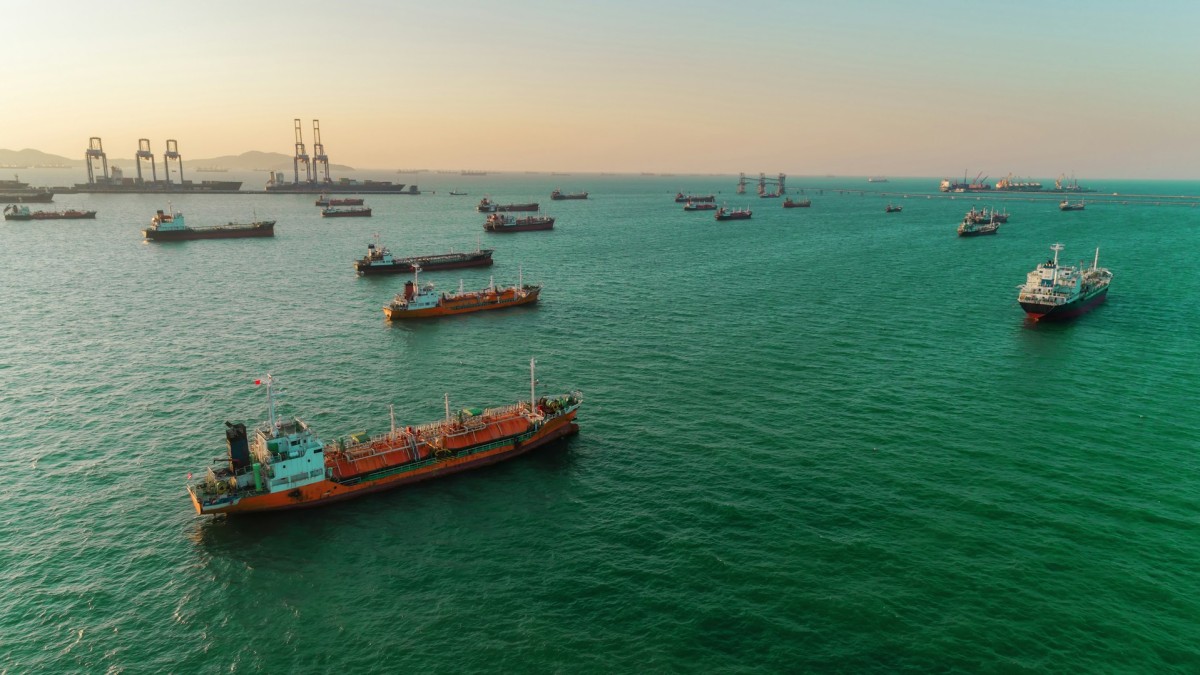
Halliburton, Valero and 3 More Stocks Set Up for a Fragile Hormuz Truce
By Michael Kern - Jun 29, 2026, 10:00 AM CDT
Brent crude has fallen more than 20% in the past month, sliding from triple digits during the worst of the Iran war to around $72 a barrel today. WTI sits near $70. That kind of move usually means one thing: the crisis is over. It isn't, not quite.
The Strait of Hormuz, the chokepoint that carries roughly a fifth of the world's seaborne oil, spent nearly four months effectively shut after the U.S. and Israel struck Iran on Feb. 28. Iran mined the strait, fired on tankers and closed the lane to anyone it considered hostile. The U.S. and Iran signed an interim memorandum of understanding on June 17 meant to reopen Hormuz to toll-free traffic and wind the war down over a 60-day window.
It hasn't gone smoothly. Iran briefly reclosed the strait in April over what it called ceasefire violations. As recently as June 25 through 28, Iran and the U.S. traded a fresh round of strikes: drones hit a container ship, the U.S. retaliated, and Tehran hit a vessel carrying Qatari oil before both sides agreed to pause ahead of new talks in Doha. Shipping is still moving under a daily quota system run by Iran's Revolutionary Guard navy, hundreds of vessels remain stranded in the Gulf, and war-risk insurance premiums are still many times above pre-war levels.
Call it half-open. Saudi Arabia has started loading tankers again at Ras Tanura, and the UAE, Kuwait and Qatar are all pushing more crude onto the water, with Gulf flows reportedly climbing back to roughly 75% of prewar levels. That's enough to crater oil prices and scramble the math for nearly every energy stock with Middle East exposure, even as the underlying conflict simmers.
That combination, falling prices, a still-fragile peace, and a region racing to restore lost output, creates an odd set of winners. Some obvious oil and gas names are nursing real wounds from the war while betting on a clean recovery. Others made their money from the chaos itself and now have to prove they can hold onto it once the chaos fades. Here are five stocks caught in that transition.
1. ExxonMobil (NYSE: XOM)
Two of ExxonMobil's Qatari LNG trains, tied to its stake in the North Field, took damage during the fighting in the first quarter, the kind of detail that doesn't show up on a stock chart so much as in the footnotes of an earnings call. CEO Darren Woods says that lost capacity, about 3% of last year's upstream production, could take up to five years to fully repair. It's a big part of why Exxon's net income fell to $4.2 billion in the first quarter, the lowest in five years, with $706 million in hedge losses tied directly to the war and another $3.9 billion in derivative timing effects layered on top.
None of that stopped Exxon from beating estimates on an adjusted basis: $1.16 a share against a Street consensus near $1.01, a beat of more than 15%. The reason is simple. Most of Exxon's growth engine never touched Hormuz to begin with. Permian output is tracking toward 1.8 million barrels of oil equivalent this year, and Guyana just posted a record above 900,000 gross barrels a day. Add a planned $20 billion in 2026 buybacks, a dividend bumped to $1.03 a share, and a Bank of America upgrade to buy on June 15, and you get a stock that's clawed back ground even with an open wound in Qatar.
Shares sit around $137, still well off the $176.41 high hit in March before the war's costs were fully priced in. There's also a political wrinkle that has nothing to do with Hormuz: Trump has accused Exxon of gouging consumers at the pump and ordered a Justice Department inquiry. Call this one a slow-recovery trade rather than a peace trade. The company is healing on a timeline measured in years, not on a calendar tied to whatever happens next in Doha.
2. Halliburton (NYSE: HAL)
Halliburton trades around $34. Citi's price target is $52. That gap is more or less the entire investment case.
The first quarter showed why both numbers exist. Middle East and Asia revenue fell 13% year over year to $1.3 billion as the war hit drilling activity across Saudi Arabia, Qatar, the UAE, Iraq and Kuwait, costing the company an estimated 2 to 3 cents a share. Yet adjusted EPS of 55 cents still beat the 50-cent consensus and operating income jumped 56% to $679 million, with CEO Jeff Miller calling North America's recovery still in its “early innings.”
What hasn't happened yet is the actual rebound in Gulf drilling activity. Saudi Arabia, Qatar and Iraq are still well below prewar levels, and Halliburton kept its crews and equipment in place through the war instead of pulling back, a decision one Melius Research analyst says positions the company to catch that demand once it returns. Shares have fallen 14% in the past month anyway. Either the market doesn't believe the rebound is coming soon, or the stock simply got ahead of itself on the way up and is now sorting that out.
3. Frontline plc (NYSE: FRO)
Frontline's stock hit a new 12-month high intraday on June 24 and closed down 5% the same day. Two days later, it fell another 6%. That kind of whiplash says a lot about what kind of stock this actually is.
The world's largest VLCC operator made an enormous amount of money from the Strait of Hormuz being closed, not from it reopening. Longer voyages, rerouted cargoes and general chaos in crude trading patterns pushed spot VLCC rates above $100,000 a day and drove Frontline's adjusted profit to $344.9 million in the first quarter, the company's best showing since 2004. Frontline pays out its adjusted earnings per share as a dividend almost dollar for dollar, so the payout jumped too, roughly 50%, to $1.55 a share.
Now the thing that made the stock is unwinding. BTIG raised its price target to $55 from $45 on June 24, arguing the reopening sets up the largest seaborne oil restocking cycle the tanker market has ever seen as Gulf states finally move crude they've been sitting on for months. Evercore, Danske Bank and Pareto don't see it that way; all three have downgraded the stock to Hold in recent months, betting the windfall rates simply revert once the disruption that created them is gone. Frontline's own CEO, Lars Barstad, has said tanker markets tend to thrive on instability, which is a fair description of the last four months, and an open question about the next four.
4. Valero Energy (NYSE: VLO)
Valero doesn't need this list. Shares hit an all-time high of $265.61 on June 3 and are still trading near $259, comfortably above where they sat before the war even started.
First-quarter EPS of $4.22 crushed the $3.16 consensus. Refining margin per barrel jumped to $16.06 from $9.56 a year earlier on unusually wide crude differentials and surging distillate cracks; ultra-low-sulfur diesel margins over Brent more than doubled, to $27.60 a barrel from $16.69. Some of that has nothing to do with Iran: a March explosion knocked out Valero's 380,000-barrel-a-day Port Arthur refinery, which has only partially restarted, and U.S. refining capacity is tight enough on its own that crack spreads aren't about to collapse just because a war ends. Some of it is Hormuz-specific: jet fuel exports cratered during the closure and are recovering now as the strait reopens, a tailwind that plays directly to Valero's export business.
Wall Street keeps raising targets through the noise, Mizuho to $289, Citi to $259, though Wolfe Research is the outlier with an Underperform call and a $203 target on the bet that these spreads can't hold. Either way works for Valero. It makes money if the peace holds, and it was making money before the peace process even started.

die mRNA-Hitzeschutzimpfung rettet Oma
saludos
ist das echt...??? So blöd kann doch keiner sein...

Entsteint die Dinger, dann das selbe Gewicht an Zucker dazu...in ein glas und ab an die Sonne..
Ab und zu am anfang umdrehen bis genügend Saft da ist......so werden amarena kirschen gemacht.
cu DL....so nach 3 Monaten sind sie fertig
normaler Zucker oder Kandis Zucker ???
 Alles anzeigen
Kaufzeit...
Die gewaltige Vola der Edelmetalle, Uran und Minenaktien bietet momentan wieder gute Kaufmöglichkeiten.
Bis vor wenigen Tagen hatte ich einen Cashbestand von rd. 25 % aufgebaut, den ich großteils rückwandelte, gerundete Werte:
-- 5 % Gold / Münzen
-- 7 % Goldaktien
-- 4 % Silberaktien
-- 5 % Energieaktien
Grüsse
Edel
Welche Gold-Silber und Energieaktien hast du wieder gekauft?


