

Hastings aktuell schöner Anstieg bis 0,535 A$.
Nur noch knapp 90% unter ATH  .
.
24. Oktober 2026, 18:51

Hastings aktuell schöner Anstieg bis 0,535 A$.
Nur noch knapp 90% unter ATH .
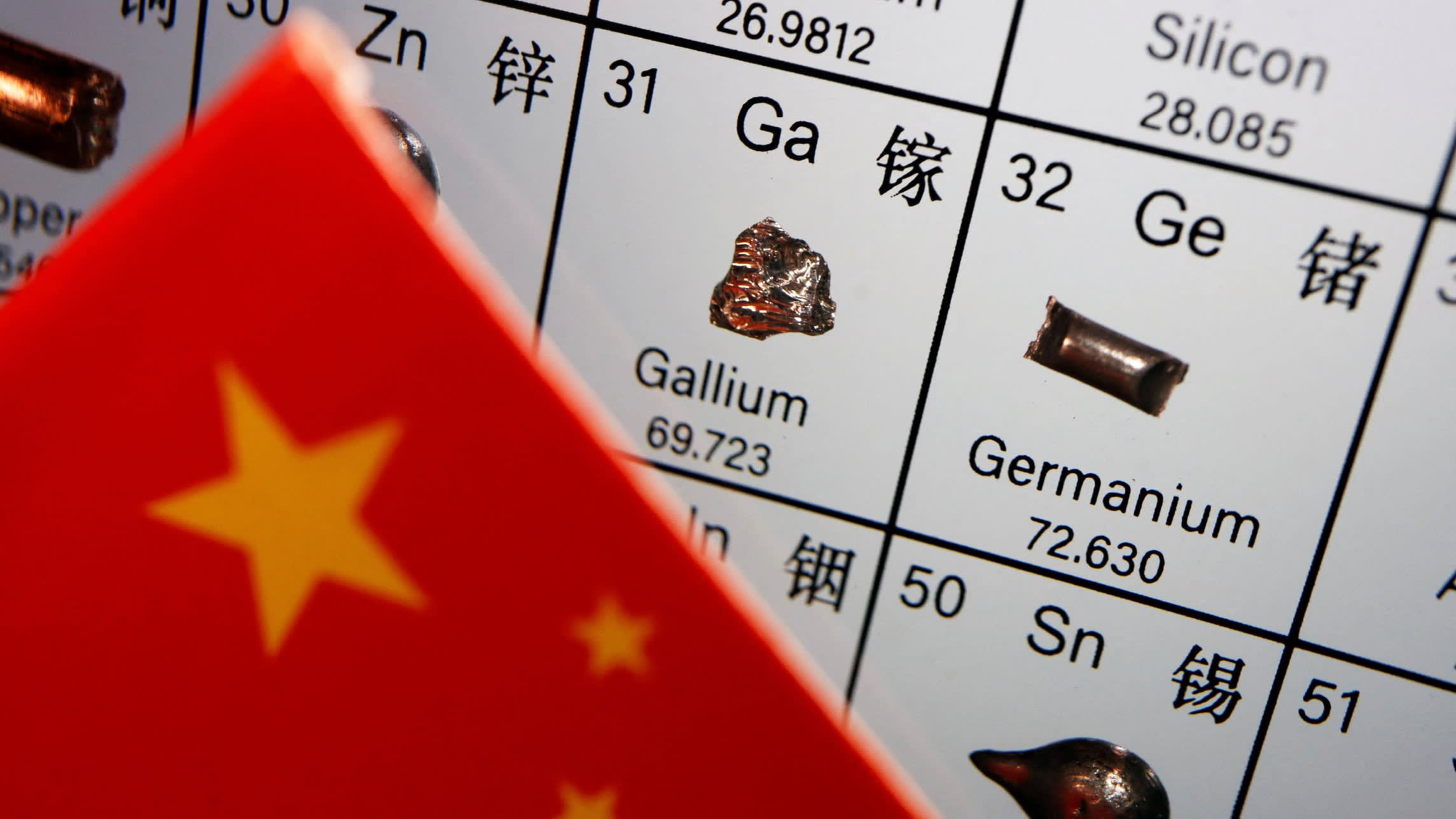
What happened on Oct 9 2025 – a quick‑look at the new Chinese rare‑earth export controls
| Item | What the announcement says | Why it matters |
|---|---|---|
| Who issued the notice | China’s Ministry of Commerce (MOFCOM) together with the General Administration of Customs released Announcement No. 18 (2025). | It is a formal amendment to China’s Export‑Control Law and the dual‑use items catalogue, so the rules are legally binding. |
| When it takes effect | Immediately on the day of issuance (Oct 9). Exporters must obtain a licence before shipping any covered item. | No grace period – any shipment made after the announcement without a licence can be seized or penalised. |
| What is now controlled | • Processing & manufacturing technologies for mining, smelting, separating or fabricating rare‑earth materials.• Assembly, adjustment, maintenance, repair and upgrade of production lines that use those materials.• Foreign‑made products that incorporate Chinese‑sourced rare‑earths (e.g., magnets, alloys, oxides, compounds, permanent‑magnet components).• Covers a broad set of medium‑ and heavy‑rare‑earth elements – samarium, gadolinium, terbium, dysprosium, lutetium, scandium, yttrium, etc. | The scope goes far beyond raw ores. Companies that simply embed Chinese rare‑earths in a finished product (e.g., a wind‑turbine generator, a smartphone speaker, a defense radar) now need a licence. |
| Who is likely to be denied | The ministry explicitly states licences are unlikely to be granted for defence customers and for many semiconductor‑sector users. | Signals a strategic use of the controls as a geopolitical lever against nations that depend on Chinese rare‑earths for high‑tech and defence applications. |
| Export‑licence process | Exporters must file an application with MOFCOM; each request undergoes a national‑security review and licences will be strictly limited. No quantitative quotas have been published yet. | Creates uncertainty for supply‑chain planning – firms must budget time and resources for licence filing and may face denial or long delays. |
| Geopolitical backdrop | Part of a series of export‑control actions Beijing has taken since 2023 in response to U.S. tariffs and other trade measures. The move is viewed as a strategic lever to pressure countries that rely on Chinese rare‑earths for defence, clean‑energy and high‑tech products. | Shows how rare‑earths have become a bargaining chip in the broader U.S.–China tech rivalry. |
| Industry reaction (early reports) | • Global manufacturers are scrambling to assess supply‑chain impacts.• Some firms are stockpiling critical rare‑earth components.• Others are accelerating projects for domestic processing in the U.S., Europe and Japan.• A few are seeking alternative sources (e.g., Australian‑based Lynas, U.S. rare‑earth mines, recycling programmes). | Indicates a rapid shift toward diversification and resilience‑building in the rare‑earth market. |
From “raw‑material only” to “product‑level” controls
Earlier Chinese restrictions mainly targeted the export of raw rare‑earth concentrates and certain intermediates. By adding foreign‑made items that contain Chinese rare‑earths, the regulation now reaches downstream manufacturers worldwide. A U.S. company that buys Chinese‑sourced dysprosium oxide, incorporates it into a permanent‑magnet motor, and ships the motor abroad will now need a Chinese licence—something that previously was not required.
Broadening the element list
The inclusion of medium‑ and heavy‑rare‑earths (e.g., samarium, gadolinium, terbium, dysprosium, lutetium) widens the impact beyond the traditionally “critical” light rare‑earths (neodymium, praseodymium). Many of these heavier elements are essential for high‑performance magnets, laser systems, medical imaging, and advanced aerospace alloys.
Defence‑sector focus
By stating that licences are “unlikely to be granted for defence customers,” Beijing is effectively denying a key strategic market to foreign defence firms that rely on Chinese rare‑earths for missile guidance, radar, and stealth technologies. This mirrors earlier export bans on gallium, germanium and tungsten that targeted U.S. defence supply chains.
Immediate enforcement
The “effective immediately” clause leaves exporters no transition window. Companies that had already scheduled shipments for later in the week must now halt those shipments until a licence is secured, creating potential logistical bottlenecks and customs seizures.
Supply‑chain ripple effects
Legal and compliance burden
The licence‑application process involves detailed end‑use disclosures, technology‑transfer assessments, and security vetting. Firms will likely need to engage trade‑law counsel and possibly consultants familiar with Chinese export‑control procedures.
| Step | Action | Rationale |
|---|---|---|
| 1️⃣ Identify all items | Compile a list of every product, component or material in your supply chain that contains any of the listed rare‑earth elements (including alloys, oxides, magnets, coatings). | You need to know exactly what falls under the new control list. |
| 2️⃣ Verify origin | Confirm whether the rare‑earth content originates from China (even if the final product is assembled elsewhere). | Only Chinese‑sourced rare‑earths trigger the licence requirement. |
| 3️⃣ Pause shipments | Halt any outbound shipments of the identified items until a licence is obtained. | Prevents customs seizure and penalties. |
| 4️⃣ Submit licence applications | Prepare the required documentation (end‑use description, technical specifications, customer details) and file with MOFCOM as soon as possible. | Licences are reviewed on a case‑by‑case basis and may be denied for defence‑related uses. |
| 5️⃣ Engage legal/compliance counsel | Seek expertise in Chinese export‑control law to ensure the application meets all procedural requirements. | Reduces risk of rejection or delays. |
| 6️⃣ Explore alternatives | Simultaneously evaluate alternative suppliers (non‑Chinese rare‑earths) or recycling options to mitigate future exposure. | Diversifies risk and prepares for possible long‑term restrictions. |
| 7️⃣ Communicate with customers | Inform downstream customers of potential delays and the steps you’re taking to secure licences or find substitutes. | Maintains transparency and preserves business relationships. |
| Scenario | How the new rule applies | Likely outcome |
|---|---|---|
| A U.S. wind‑turbine maker imports dysprosium‑containing magnet assemblies from a Chinese subcontractor and ships the turbines to Brazil. | The magnet assemblies contain Chinese‑sourced heavy rare‑earths → export from China now requires a licence. | Without a licence, the shipment could be stopped at Chinese customs; the turbine maker must either obtain a licence (unlikely for a non‑defence use) or replace the magnets with non‑Chinese sources. |
| A European EV battery producer uses yttrium‑stabilized zirconia powder sourced from China in solid‑oxide batteries. | Yttrium is on the controlled list; the processing technology for the powder is also covered. | The battery producer must apply for a licence; if denied, it must source yttrium from other producers (e.g., Australia) or redesign the battery chemistry. |
| A Japanese camera lens manufacturer purchases gadolinium‑doped glass from a Chinese supplier for high‑precision optics. | Gadolinium is a medium‑heavy rare‑earth; the finished glass is a foreign‑made item incorporating Chinese rare‑earths. | Licence needed; given the civilian nature, a licence may be granted, but the application process could delay production schedules. |
| Indicator | Why it matters |
|---|---|
| Official quota announcements (if any) | Quantitative limits would clarify how many licences might be approved. |
| Follow‑up guidance from MOFCOM | Detailed procedural rules (forms, timelines, required documents) will affect how quickly companies can comply. |
| Responses from major economies (U.S., EU, Japan) | Expect possible counter‑measures such as increased subsidies for domestic rare‑earth projects or diplomatic protests. |
| Market price movements for heavy rare‑earths (Dy, Tb, Ho, Er) | Tightening supply often leads to price spikes, influencing cost structures for downstream industries. |
| Legal challenges | Companies may seek judicial review or arbitration if licences are denied; tracking such cases can reveal how strictly the rule is enforced. |
Staying ahead of the licensing process and building alternative supply routes will be crucial for maintaining production continuity in sectors ranging from renewable energy to high‑tech electronics.

Interessantes Vid zu (Rück-)gewinnung von Seltenen Erden/Metallen, PM aus Electronikschrott, aber auch um effizientere + kostengünstigere Li-Gewinnung.
Frage die ich mr stelle: ist das ne Gefahr für bisherige Verfahren bei UUUU,MP und UCU (bin in allen investiert).
Wir können jetzt in Sekunden etwas herstellen, wofür man früher Monate gebraucht hat. Klingt verrückt, oder? Genau das behaupten amerikanische Forscher mit ihrer neuesten Technologie – dem sogenannten „ Flash Joule Heating “. Damit soll man in Sekunden Lithium gewinnen können, ein superwichtiger Rohstoff für Akkus und Elektroautos. Aber nicht nur das, auch Gold, Silber und sogar seltene Erden können einfacher zurückgewonnen werden. Das Verfahren arbeitet viel effizienter, ohne giftige Chemie und in unfassbarer Geschwindigkeit. Wir schauen uns heute an, wie dieser „Blitz“-Prozess genau funktioniert, wie man damit Lithium neu gewinnen kann und ob das vielleicht endlich die Antwort auf unser globales E-Waste-Problem sein könnte. [sämtliche Quellen in Vidbeschreibung)
...........
00:00 Neue Lithiumgewinnung
00:42 Lithiumnachfrage
01:38 Joule Erwärmung
02:28 Flash Joule Heating Verfahren
03:06 Verfahren für Edelmetalle
04:01 Entwicklung des Verfahrens
05:12 Recycling von seltenen Erden
07:17 Neue Lithiumgewinnung
09:24 Das große Aber
11:30 Fazit
US Reg. stopft 1,6 mrd usd in USAR Aktie (bei Fugi gefunden)
Aktie vorbörslich...+ 38 %, close am Fr. was bei 25...heute n8 schon 40 usd gesehen....wie bei PM...alles nur noch total irre
...hoffe der anderen RE Aktien, hab MP, METC (lange Zeit unter Wasser) ziehen fett nach...
p.s. ATH war wohl was bei ca. 44 usd, wenn wir da drüber gehen...ist kein INvestor im Minus + hat wg. Buchverlusten Verkaufsdruck...gaaanz wichtig..aus charttechn. und psychol. Sicht
Zitat
2026-02-03 Project Vault „präsentiert Amerika von seiner besten Seite“ – Aktien von Seltenen Erden sind begeistert.
Project Vault 'Puts America's Best Foot Forward'-Rare Earth Stocks Dig It
Die Aktien von Seltenen Erden und kritischen Mineralien legten zu, da die Trump-Regierung weiterhin ihren bisher aggressivsten Schritt zur Entkopplung der amerikanischen Industrie von den chinesischen Mineralienlieferketten vorantrieb .
Der Sektor reagierte am Dienstag auf den offiziellen Start des Projekts Vault , einer massiven öffentlich-privaten Partnerschaft im Wert von 12 Milliarden Dollar, die darauf abzielt, die US-Wirtschaft vor globalen Rohstoffschwankungen zu schützen.
Die CRML-Aktie steigt. Sehen Sie sich hier den Chart und die Kursentwicklung an.
Finanzierung für Seltene Erden genehmigt
Am Montag kündigte die US-amerikanische Export-Import-Bank (EXIM) die Finanzierung eines Direktkredits von bis zu 10 Milliarden US-Dollar für das Projekt Vault an, um die langfristige Finanzierung der Reserve an kritischen Mineralien und Seltenen Erden sicherzustellen.
🔒PROJEKT VAULT: Die amerikanische Wirtschaft ist auf kritische Mineralien angewiesen – die Bausteine, die die amerikanische Industrie wiederbeleben und unsere Lieferketten stärken.
Deshalb hat EXIM das Projekt Vault ins Leben gerufen: die strategische Reserve kritischer Mineralien der USA. 🇺🇸
— US Export-Import Bank (@EximBankUS) 3. Februar 2026
Mehr als ein Dutzend große Unternehmen, darunter General Motors , Stellantis, Boeing, Corning, GE Vernova und Google , werden weitere knapp 2 Milliarden Dollar zur Finanzierung des Projekts Vault bereitstellen.
EXIM-Chef John Jovanovic war am Dienstag in der CNBC-Sendung „Squawk Box“ zu Gast und unterstrich die Bedeutung der Reserve.
„Damit entsteht eine öffentlich-private Partnerschaftsformel, die unserer Meinung nach einzigartig geeignet ist und Amerika von seiner besten Seite präsentiert“, sagte Jovanovic.
„Es vereint unsere robusten Kapitalmärkte, die zu den tiefsten und besten der Welt gehören. Aber es bringt auch die Originalgerätehersteller mit ein… sie sind es, die das langfristige finanzielle Engagement eingehen“, fügte er hinzu.
Der Präsident der Export-Import-Bank, @JJovanovicUSA, über das Projekt Vault – die erste strategische Reserve für kritische Mineralien in der Geschichte der USA: „Es schafft eine öffentlich-private Partnerschaft, die unserer Meinung nach einzigartig geeignet ist und Amerikas Stärken optimal präsentiert. Es vereint unsere starke… pic.twitter.com/PMya9kUyxn
— Rapid Response 47 (@RapidResponse47) 3. Februar 2026
Aktienbewegungen im Bereich Seltener Erden
Investoren strömten in inländische Bergbau- und Verarbeitungsunternehmen und betrachteten die milliardenschwere Zusage der Regierung als eine Art „Sicherheitsgarantie des Weißen Hauses“ für den Sektor.
Hier die größten Kursbewegungen bei Aktien von Unternehmen im Bereich Seltene Erden und kritische Mineralien am Dienstag :
MP Materials Corp. (NYSE: MP )
Energy Fuels Inc. (AMEX: UUUU )
USA Rare Earth, Inc. (NASDAQ: USAR )
Idaho Strategic Resources, Inc. (AMEX: IDR )
Critical Metals Corp. (NASDAQ: CRML )
American Resources Corp. (NASDAQ: AREC )
United States Antimony Corp. (AMEX: UAMY )
Trilogy Metals Inc. (AMEX: TMQ )
Lithium Americas Corp. (NYSE: LAC )
Chinas Mineralien-Engpass beenden
Durch die Bereitstellung langfristiger Finanzierungen reduziert die Regierung effektiv die Risiken auf dem volatilen Markt für Seltene Erden für den Privatsektor und stellt sicher, dass amerikanische Hersteller auch dann über einen inländischen Rohstoffvorrat verfügen, wenn China die Exporte einschränkt.
Für Investoren schafft dies eine Untergrenze für die inländische Nachfrage nach Seltenen Erden und signalisiert, dass die USA nun die Sicherung der Lieferkette in souveränem Maßstab finanzieren .
Foto: Shutterstock
Weitergin gutes Gelingen, Gruss RS
So viel wie die USA brauchen holen die nie und nimmer aus dem Boden,
auch mit 12 Milliarden nicht.
Wenn es so einfach wäre hätten sie keinen Engpass und würden schon lange fördern.
Das Umwelt-Thema noch nicht betrachtet.
WICHTIGE EINZELHEITEN:
* Die China Chamber of Commerce of Metals, Minerals &Chemicals Imports & Exports veranstaltet das Briefing am 25. März in Peking.
JIANGXI COPPER COMPANY LIMITED +1,56 %
ZIJIN MINING GROUP COMPANY LIMITED +1,73 %
CMOC GROUP LIMITED +2,93 %
JIANGXI COPPER COMPANY LIMITED -0,13 %
CHINA NORTHERN RARE EARTH (GROUP) HIGH-TECH CO.,LTD +5,02 %
* Vertreter des Handelsministeriums und der Zollbehörde werden Metallunternehmen über Exportkontrollen, Zollabwicklung und Compliance-Anforderungen informieren. Sie geben einen Ausblick auf die Handelsbeziehungen zwischen China und den USA sowie auf die übergeordnete Außenhandelspolitik im Rahmen des kommenden Fünfjahresplans.
* Auf der Agenda stehen außerdem Marktanalysen zu globalem Angebot und Nachfrage sowie zur Entwicklung von Ressourcen im Ausland für Seltene Erden und Metalle wie Wolfram, Zinn und Antimon.
* Zu den Teilnehmern zählen bedeutende staatliche und private Metallhersteller, darunter China Rare Earth Group, China Northern Rare Earth, Jiangxi Copper, CMOC und Zijin Mining sowie weitere Unternehmen. © Reuters - 2026
Weiterhin gutes Gelingen, Gruss RS
Hat jemand hier Zugang zu Charts von Scandium?
cu DL...stolperte in OZ darüber.....vielleicht wird das was

Charts von Scandium
Finde nur den:
Sunrise ist seit einem Jahr x40 gegangen 😅 0,25 auf 10 AUD.
Gruß,
GL

Sunrise ist seit einem Jahr x40 gegangen 😅 0,25 auf 10 AUD.
Gruß,
GL

Danke Jungs...hat sich erledigt. Dann sind sie ein 30.000 Unzen produzent von Goldäquivalent
cu DL
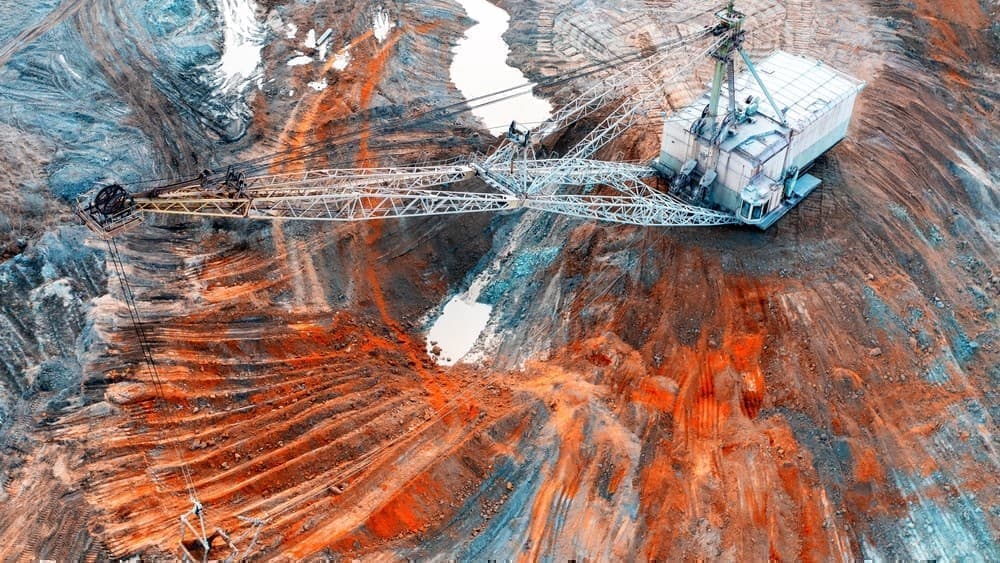
By Tom Kool - Mar 24, 2026, 4:30 PM CDT
In a typical Chinese rare earth processing plant, 200 workers move through a maze of massive chemical tanks, risking life and limb to produce the materials that power everything from fighter jets and missile components to cellphones.
Hundreds of these facilities operate across China, and they give Beijing overwhelming control over the single most critical choke point in the modern industrial economy.
More from Yahoo Scout
What strategic advantages does REalloys' supply chain offer?
What makes Saskatchewan's AI-powered processing plant different?
How is REalloys breaking China's rare earth monopoly?
Why are the Pentagon's 2027 procurement rules important?
But now, in Saskatchewan, Canada, a hi-tech plant of engineers and chemists is beginning to break that monopoly.
The facility is built around an AI enabled operating system that minimizes waste, reduces exposure to hazardous materials, and creates a cleaner, more secure processing chain.
And one company has locked in exclusive rights to the vast majority of what that plant produces.
That company is REalloys (NASDAQ: ALOY).
It operates in the part of the rare earth supply chain that barely exists outside China - the step where strategic independence is actually won or lost.
As President Trump pointed out, it isn’t rare earths that are critical to national security, it's the “rare processing” industry.
Digging minerals out of the ground is relatively easy. Turning them into finished metals and alloys for fighter jets, drones, missile guidance systems, and advanced radar is something else entirely.
That’s where Western supply chains break down, and where REalloys is fighting to make a difference.
The company operates its own metallization facility in Euclid, Ohio, built on nearly a decade of R&D with the U.S. Department of Energy and Department of Defense. It also holds an exclusive offtake agreement with the Saskatchewan Research Council (SRC), the government-backed group behind the AI-powered processing plant.
Here’s how the chain works: SRC refines rare earth feedstock sourced from allied nations across four continents. REalloys takes delivery in Ohio, converts those metals into defense-grade alloys and magnets, and has confirmed contracts with the U.S. defense industrial base.
Every critical step happens on North American soil - with no Chinese chemicals, no Chinese technology, and no Chinese capital.
As REalloys’ Head of R&D, Andy Sherman, puts it: “Concentrates are commodities. Materials are commitments.”
The Pentagon doesn’t buy rocks. It buys finished, defense-qualified materials.
And that’s exactly what this supply chain delivers.
How China Accidentally Created Its Biggest Competition
When REalloys (NASDAQ: ALOY) processing partner began developing its first commercial rare earth separation facility, China controlled the overwhelming majority of global export technology. Following China’s 2020 export control law, access to that technology became restricted.
So the team ultimately designed and built its own separation, control and automation systems domestically – establishing independent Western rare earth processing capability.
What they ended up with was an alternative to Chinese technology with better output and without the supply chain risk.
As a result, the facility has automated the most labor-intensive step of rare earth processing, separating up to 17 chemically similar elements into the specific rare earths you need.
In a Chinese plant, this process requires over 200 workers managing chemical tanks and adjusting valves manually. The Saskatchewan facility was able to reduce this by approximately 80 workers and an AI that receives thousands of data points every second and can make the necessary adjustments that no human team could coordinate.
The plant was deliberately built at about 25-30% the capacity of a full-scale Chinese commercial facility, essentially a demonstration plant to prove the technology. At a fraction of the size, however, it already has the capability to produce much higher purity metals and higher output than Chinese plants.
Commercial production is expected to start in early 2027, once the plant reaches full production REalloys expects to receive approximately 460 tonnes of defense-grade rare earth metals per year. That material becomes the permanent magnets inside the next generation of Western defense systems like fighter jets, missiles, and drones.
Why This Matters Right Now
Most people have heard that China dominates the rare earths market, about 90% of the world's rare earths are processed there. What they haven't thought through is what that actually means when the supply gets cut off.
Japan figured this out decades ago and built strategic stockpiles covering two to three years of national consumption. The United States, however, has stockpiled nothing. Neither has Europe.
We've been running on just-in-time supply from a country that issues rare earth export licenses on a monthly basis. If Beijing is happy with you this month, you get your allocation. If they're not, they cut it.
When China briefly restricted exports last year, a Ford plant was forced to shut down almost immediately. When Trump threatened 100% tariffs, China's response was simple: no more processed rare earths. Trump backed off very quickly.
Now consider the effects on the military side. In 2024, Ukraine produced 1.2 million combat drones, every single magnet in every one of them was manufactured in China. An F-35 carries 435 kilos of rare earths. A next-gen U.S. destroyer needs 4.5 tons. A nuclear submarine needs 1.5 tons.
Without a secure supply of these materials, none of those systems get built, which means China effectively holds a kill switch over Western defense production.
The Pentagon knows it, too. That's why new procurement rules taking effect January 1, 2027, will ban Chinese-sourced rare earths from the entire U.S. defense supply chain, from the mine all the way through to the finished product.
That means every defense contractor in the country will need a qualified, non-Chinese source. REalloys (NASDAQ: ALOY)is positioning to be that source.
"1% Reliance on China Is 100% Reliance on China"
There's a reality in the rare earth industry that most companies haven't fully reckoned with: 1% reliance on China is 100% reliance on China. If any single input in your supply chain comes from Beijing, your entire operation is one phone call away from shutting down.
REalloys' supply chain has no Chinese inputs at any stage, processing technology, furnaces, chemicals, AI systems, or consumables. All of it is sourced outside China.
Most of the competition can't say the same. You can mine rare earths in the U.S., build your own processing plant, and still be one supply disruption away from a shutdown.
That’s because critical parts like graphite anodes need replacing several times a week, and right now they only come from China. Starting from zero, it would realistically take five to seven years to build what REalloys already has.
What Makes This Opportunity Different
REalloys has exclusive rights to defense-grade rare earth metals through the Saskatchewan facility, including the heavy rare earths, Dysprosium and Terbium, that dramatically increase a magnet's performance.
Light rare earths go into washing machines and consumer EVs. Heavy rare earths, on the other hand, go into F-35 fighter jet engines and missile guidance systems. REalloys (NASDAQ: ALOY) plays the scarcer, more strategically critical end of the market, at a fraction of the valuation.
Their Ohio facility converts those metals into finished alloys and magnets, and scaled production is expected to scale up to 18,000 tonnes per year of heavy rare earth permanent magnets. At that level, REalloys expects to become the largest producer of refined Dysprosium and Terbium outside of China.
Washington has taken notice as well. REalloys has secured a $200 million letter of intent from the U.S. EXIM Bank. And the board reads less like a commodities company and more like a national security briefing, including a former Vice Chief of Staff of the U.S. Army, the President of GM Defense, an executive formerly from top defense companies like Raytheon and Boeing, the former Premier of Saskatchewan, and the President of Palantir Canada.
The Pentagon’s deadline is now months away, while competitors are still 5 to 7 years behind.
REalloys (NASDAQ: ALOY) expects to be the only company with a fully operational, non-Chinese, mine-to-magnet supply chain when it arrives, powered by six people and an AI that outperforms plants with 80 workers on the floor.
Despite what most believe, the rare earth story was never about who has the raw material in the ground. It's about who can turn the raw material into something the Pentagon can actually use, and right now, that answer is REalloys.
Es gibt einen ETF von Sprott, für die Zusammensetzung klicke hier:
Aug 07, 2026 - Trump to meet mining execs from Rio Tinto, BHP, MP Materials, and Freeport to counter China reliance: report
President Donald Trump will meet with top U.S. critical minerals executives on Friday as the White House showcases its push to untangle American supply chains from Chinese dominance, Bloomberg News reported.
It also includes plans to unveil a handful of deals and memoranda of understanding.
Among those invited to the meeting are representatives from industry heavyweights including Rio Tinto (RIO), BHP Group (BHP) and Freeport-McMoRan (FCX), as well as participants from MP Materials (MP), USA Rare Earth (USAR), Energy Fuels (UUUU), US Antimony (UAMY), Sunrise Energy Metals (SREMF), and The Metals Company (TMC) among others, the report said.
Some companies are still determining whether they will attend in person and if so, which executives to send, according to the people familiar.
Trump is set to be joined by leaders of his National Energy Dominance Council, including Interior Secretary Doug Burgum, executive director Jarrod Agen, as well as White House adviser David Copley.
The event has been in the works for weeks, though there’s been a rush to pull together final details in recent days, with a range of US government agencies tapped to participate.
A White House official said the administration is putting together a historic meeting of mining industry officials as the president advances measures to support critical mineral development, the report added.
Friday’s meeting comes more than a year after the US government launched a multi-billion critical minerals policy that’s embraced a new model of statecraft, with American taxpayers committing some $10 billion to build a so-called mine-to-magnet supply chain. The goal is ensuring robust US production of rare earths and critical products deemed essential to national security.
saludos
kurz mal Grok dazu befragt...
Hier eine Übersicht zu dem Critical Minerals / American Mining Industry Roundtable vom 7. August 2026 im State Department:
Eingeladen waren unter anderem Vertreter von:
Bestätigte bzw. namentlich genannte Teilnehmer/Executives (u. a. aus White-House-Pool-Report und Berichten):
Regierungsseite: Präsident Trump, Außenminister Marco Rubio, Innenminister Doug Burgum, Handelsminister Howard Lutnick u. a.
Laut White-House-Fact-Sheet und Berichten (über 2 Mrd. USD an Mining-/Critical-Minerals-Projekten + über 180 Mio. USD für Mining-Schools):
Export-Import Bank (EXIM):
Department of War / Office of Strategic Capital (OSC):
Weitere:
Zusätzlich wurde auf bereits laufende bzw. zuvor genehmigte Deals (insgesamt seit 2025 ca. 160 Minerals-Deals im Volumen von fast 40 Mrd. USD) und MOUs hingewiesen. Nicht alle eingeladenen Großkonzerne (z. B. Rio Tinto/BHP) erhielten an dem Tag neue direkte Projektfinanzierungen – der Fokus lag auf der Präsentation der Agenda und den genannten Investments.
Quellen sind vor allem das offizielle White-House-Fact-Sheet, EXIM-Ankündigungen, Reuters und Pool-Berichte vom 7. August 2026. Eine vollständige öffentliche Teilnehmerliste aller ~200 Personen gibt es nicht.
Brasilien hat am 16. September sein Gesetz über kritische und strategische Mineralien in Kraft gesetzt – ohne Vetos, und mit dem Dekret zur Einsetzung des zuständigen Rats am selben Tag. Für alle, die Explorer mit Brasilien-Bezug verfolgen (Meteoric, Viridis, Brazilian Rare Earths, Rare Earths Americas, Canamera u. a.), sind zwei Punkte entscheidend, die in den Schlagzeilen untergehen:
1. Explorationsgenehmigungen für kritische Mineralien laufen künftig nach einer festen, nicht verlängerbaren Frist von zehn Jahren automatisch aus – ohne Abschlussbericht ist der Titel weg.
2. Freigewordene Gebiete müssen innerhalb von zwei Jahren von der Bergbaubehörde ANM versteigert werden.
Dazu kommen ein Garantiefonds von bis zu 2 Mrd. R$, Steuergutschriften (2030–2034) nur für in Brasilien gegründete Gesellschaften, eine F&E-Pflicht für Produzenten, von der die Hälfte über brasilianische Junior-Gesellschaften laufen muss, und ein dem Präsidialamt unterstellter Rat, der Kontrollwechsel und wesentliche ausländische Beteiligungen prüft. Tausende Seltenerd- und Lithiumtitel haben damit ein Ablaufdatum – und Halter ohne Kapital werden verkaufen, ausfarmen oder verlieren.
Transparenzhinweis: Ich bin Gründer von NEUROBRAS (São Paulo) und baue eine brasilianisch kontrollierte Explorationsgesellschaft auf, die das gesamte Register datengetrieben screent. Eine ausführliche Einordnung des Gesetzes steht, auch auf Deutsch, im Blog auf neurobras.com; Links setze ich hier als neuer Nutzer bewusst nicht. Fragen zum Gesetz beantworte ich hier gern.
Passend zu der Thematik:
Aktuelle Ausgabe in ARD - "Plusminus"
"Seltene Erden - EU könnte bei den kritischen Rohstoffen abgehängt werden
Die chinesischen Exportrestriktionen im vergangenen Jahr haben der EU und der Wirtschaft die Abhängigkeit bei Seltenen Erden von China deutlich gemacht. Nun hat die EU einen Plan ausgearbeitet, wie die Abhängigkeit verringert werden soll. Doch Experten kritisieren: Der Plan komme viel zu spät und er sei viel zu wenig ambitioniert. Andere Länder wie Japan oder die USA investieren längst in alternative Lieferketten. Die Befürchtung: Die EU könnte nun in eine weitere Abhängigkeit geraten."
Wenn WIR das schon vor ca. 20 Jahren zum Thema hatten,
ich selbst damals meine ersten Minen in dem Segment kaufte,
wo bitte waren die Spezialisten
aus Wirtschaft und Politik bitte?
IM TIEFSCHLAF!
Zwei Präzisierungen zu meinem Beitrag #138, nachdem ich den amtlichen Gesetzestext durchgearbeitet habe.
Erstens die Fundstelle: Es handelt sich um das Gesetz Nr. 15.506 vom 16. September 2026.
Zweitens die F&E-Pflicht. Ich hatte geschrieben, die Hälfte müsse über brasilianische Junior-Gesellschaften laufen. Genauer ist: Art. 36 sieht vor, dass 50 % der Mittel von den Produzenten selbst eingesetzt werden und 50 % über Partnerschaften – wahlweise mit Junior-Gesellschaften, mit dem nationalen Forschungsnetzwerk RNMCE oder mit weiteren vom Rat benannten Einrichtungen. Junior-Gesellschaften sind also eine von drei Möglichkeiten, keine reservierte Quote.
Ergänzend eine Meldung von gestern: Die Entwicklungsbank BNDES hat am 17. September im Rahmen des Programms „Brasil Soberano“ 2 Mrd. R$ ausdrücklich für die Wertschöpfungskette kritischer Mineralien reserviert – zu 3 % p.a. für Investitionen, Anträge bis Ende 2027. Das ist der günstigste Satz des gesamten Programms; Betriebsmittelkredite liegen dort bei 8,3 bis 9,8 %.